10 Biggest Car Companies

TM, VWAGY, and STLA lead the 10 biggest car companies list…

The automotive industry is a crucial part of the global economy, producing vehicles that efficiently transport people and goods within nations and across entire regions. These companies manufacture cars, trucks, vans, and sport utility vehicles (SUVs). Some even produce motorcycles, all-terrain vehicles, and commercial vehicles like transport trucks and buses.

The biggest auto manufacturers have a large global footprint, selling vehicles to consumers and businesses worldwide. These big companies are mainly headquartered in just a few countries that lead the industry; however, the list of the 10 biggest also includes car companies from other countries.

We look in detail below at the 10 biggest car companies by trailing 12 months (TTM) revenue as of December 21, 2022. Some companies outside the U.S. report profits semi-annually instead of quarterly, so the TTM data may be older than it is for companies that report quarterly. This list is limited to publicly traded companies in the U.S. or Canada, either directly or through ADRs.

Important: Some of the stocks below are only traded over-the-counter (OTC) in the U.S., not on exchanges. This may be because they are foreign companies that do not have sponsored ADRs on traditional exchanges. As a result, trading OTC stocks often carry higher trading costs than trading stocks on exchanges. Additionally these stocks may be subject to foreign exchange fluctuations. This can lower or even outweigh potential returns.

#1 Volkswagen AG (VWAGY)

  • Revenue (TTM): $284.34 billion
  • Net Income (TTM): $19.76 billion
  • Market Cap: $81.0 billion
  • 1 Year Return (TTM): -36.5%
  • Exchange: OTC

Volkswagen is a Germany-based multinational automotive manufacturing company. It develops and produces passenger cars, trucks, and light commercial vehicles such as buses. Vehicle models include the Tiguan, Golf, Jetta, Passat, and more. The company stopped making its once-popular Volkswagen Beetle compact car last year due to falling demand for smaller cars. Volkswagen’s best-known luxury brands are Porsche and Audi. The company also manufactures parts and offers customer financing and fleet management services.

#2 Toyota Motor Corp. (TM)

  • Revenue (TTM): $270.58 billion
  • Net Income (TTM): $20.39 billion
  • Market Cap: $189.4 billion
  • 1 Year Return (TTM): -21.8%
  • Exchange: New York Stock Exchange (NYSE)

Toyota is a Japan-based multinational. It was the first foreign manufacturer to build a dominant market share in the U.S. automobile market by setting the industry standard for efficiency and quality. Toyota designs and manufactures cars, trucks, minivans, and commercial vehicles. Vehicle models include the Corolla, Camry, 4Runner, Tacoma, and the Prius, the hybrid electric sedan. Lexus is the company’s luxury car division. Toyota also produces parts and accessories and provides dealers and customers with financing.

#3 Stellantis (STLA)

  • Revenue (TTM): $181.58 billion
  • Net Income (TTM): $16.97 billion
  • Market Cap: $45.2 billion
  • 1 Year Return (TTM): -15.8%
  • Exchange: NASDAQ

Stellantis is a multinational automaker that was created in 2021 through the merger of French automaker Groupe PSA and Italian-American automaker FCA (Fiat Chrysler Automobiles). The company is one of the largest automakers in the world, with a strong presence in Europe, North America, and South America. Stellantis offers a wide range of vehicles, including passenger cars, trucks, vans, and SUVs, under various brands including Peugeot, Citroën, DS, Opel, Vauxhall, Jeep, Ram, Dodge, and Chrysler. The company is headquartered in Amsterdam, Netherlands.

#4 Mercedes Benz AG (MBGYY)

  • Revenue (TTM): $156.23 billion
  • Net Income (TTM): $25.64 billion
  • Market Cap: $70.2 billion
  • 1 Year Return (TTM): -6.0%
  • Exchange: OTC

Mercedes Benz is a Germany-based multinational automobile manufacturer. The company manufactures passenger cars, vans, off-road vehicles, and commercial vehicles like transport trucks and buses. It produces vehicles under several brands, including Daimler, Mercedes-Benz, FUSO, Western Star, and more. Mercedez Benz also offers financing and leasing packages for customers and dealers.

#5 Ford Motor Co. (F)

  • Revenue (TTM): $151.74 billion
  • Net Income (TTM): $9.01 billion
  • Market Cap: $46.1 billion
  • 1 Year Return (TTM): -39.0%
  • Exchange: NYSE

Ford is a multinational automotive manufacturer based in Michigan. The company develops, manufactures, and services cars, SUVs, vans, and trucks. Vehicle models include the Fusion, Mustang, Edge, Escape, F-150, Ranger, and more. The company also provides vehicle-related financing and leasing.

#6 General Motors (GM)

  • Revenue (TTM): $147.21 billion
  • Net Income (TTM): $9.68 billion
  • Market Cap: $50.0 billion
  • 1 Year Return (TTM): -34.6%
  • Exchange: NYSE

General Motors (GM) is a multinational automobile manufacturer. The company designs and manufactures cars, trucks, and automobile parts. It has been a leader in the development of electric cars, first with the Chevy Volt and its successor, the Chevy Bolt. It operates under four major vehicle brands: GMC, Chevrolet, Cadillac, and Buick. The company also offers automotive financing.

#7 Honda Motor Co. Ltd. (HMC)

  • Revenue (TTM): $126.17 billion
  • Net Income (TTM): $5.29 billion
  • Market Cap: $39.8 billion
  • 1 Year Return (TTM): -11.1%
  • Exchange: NYSE

Honda is a Japan-based multinational automobile company. It manufactures passenger cars, trucks, vans, all-terrain vehicles, motorcycles, and related parts. Vehicle models include the Civic, Accord, Insight Hybrid, Passport, Odyssey, Fit and more. Acura is the company’s luxury car division. The company also provides financial and insurance services.

#8 Tesla Motors (TSLA)

  • Revenue (TTM): $74.86 billion
  • Net Income (TTM): $11.19 billion
  • Market Cap: $435.0 billion
  • 1 Year Return (TTM): -54.1%
  • Exchange: NASDAQ

Tesla is a manufacturer of electric vehicles and clean energy solutions. Tesla manufactures four electric models, the Model 3, Model Y, Model S, and Model X. Each model is capable of speeds of more than 135 miles per hour and can accelerate from 0-60 in less than 4.8 seconds. They all have a range of more than 320 miles and generate more than 346 horsepower. Tesla provides financing for retail customers.

#9 Nissan Motors (NSANY)

  • Revenue (TTM): $73.73 billion
  • Net Income (TTM): $0.9 billion
  • Market Cap: $12.7 billion
  • 1 Year Return (TTM): -33.4%
  • Exchange: OTC

Nissan is a Japan-based multinational automotive company. It designs and manufactures passenger vehicles, forklifts, marine equipment, and related parts. Vehicle models include the Altima, Maxima, Sentra, Versa, Pathfinder, Rogue, Titan, and its LEAF electric car. The company’s luxury division is Infiniti. The company also offers financing and leasing services.

#10 BYD Co. Ltd. (BYDDY)

  • Revenue (TTM): $51.37 billion
  • Net Income (TTM): $1.48 billion
  • Market Cap: $74.7 billion
  • 1 Year Return (TTM): -18.0%
  • Exchange: OTC

BYD Co. Ltd. is a Chinese multinational corporation that specializes in the design, development, and manufacture of a wide range of products, including electric vehicles, batteries, solar panels, and other renewable energy products. The company is headquartered in Shenzhen, China and has operations in more than 50 countries around the world. BYD is known for its leadership in the electric vehicle industry and has a strong presence in both the passenger car and commercial vehicle markets. In addition to its core businesses, BYD also has a significant presence in the renewable energy sector and is a leading supplier of solar panels and energy storage systems.

Source: investopedia.com
Samsung Elec to expand chip production at largest plant next year – media

Samsung Electronics plans to increase chip production capacity at its largest semiconductor plant next year, despite forecasts of an economic slowdown, a South Korean newspaper reported late on Sunday.

The move contrasts with the scaling back of investment by rival chipmakers amid falling demand and a glut of chips.

Analysts have said that Samsung’s persistence with investment plans will likely help it take market share in memory chips and support its share price when demand recovers.

Samsung plans to expand its P3 factory in Pyeongtaek, South Korea, by adding 12-inch wafers capacity for DRAM memory chips, the Seoul Economic Daily reported, citing unnamed industry sources.

It will also expand the plant with additional 4-nanometre chip capacity, which will be made under foundry contracts – that is, according to clients’ designs – the paper said.

P3, which started production of cutting-edge NAND flash memory chips this year, is the company’s largest chip manufacturing facility.

Samsung is planning to add at least 10 extreme ultraviolet machines next year, the newspaper said.

Samsung declined to comment on the report.

In October it said it was not considering intentionally cutting chip production, defying the broader industry’s tendency to scale back output to meet mid- to long-term demand.

“We plan to stand behind our original infrastructure investment plans,” Han Jin-man, executive vice president of memory business at Samsung, said then.

In contrast, memory chip rival Micron Technology Inc said last week it would adjust down its investments in fiscal 2023 to between $7 billion and $7.5 billion, compared with $12 billion in fiscal 2022. It would also be “significantly reducing capex” plans in fiscal 2024, it said.

Taiwanese chipmaker TSMC in October cut its 2022 annual investment budget by at least 10% and struck a more cautious note than usual on upcoming demand.

“The chip industry downturn will add to the difficulties of No. 2 and below chip companies, and have a positive impact on the market control of top companies such as Samsung,” Greg Roh, head of research at Hyundai Motor Securities, said on Monday.

Source: reuters.com

Netflix stock is up 65% since July, but the company faces 5 big problems in 2023

Netflix (NFLX) shares have been on a tear over the last six months of the year.

But investors will have plenty to worry for the company in 2023, according to one Wall Street analyst.

Needham’s Laura Martin argued in a new client note on Thursday the stock will battle several headwinds in the new year including slowing subscriber growth and increased pressure on its key financial metric, average revenue per user, or ARPU.

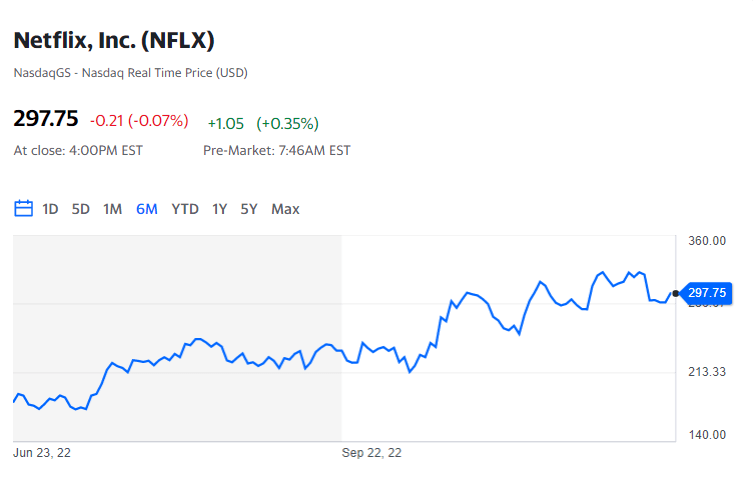
Shares of Netflix, down about 50% since the start of the year, have climbed more than 65% over the past six months as industry watchers see content improvements decreasing churn in 2023, while investors remain optimistic by the platform’s foray into advertising — despite recent negative headlines surrounding its November debut.

Martin, however, did not seem convinced by the recent rally, arguing in her note: “NFLX’s peak subs may be behind it, because churn is rising for all [over-the-top platforms].”

She added if Netflix does report subscriber growth in 2023, those users will likely come from low-ARPU regions overseas, while subscriber losses will stem from high-ARPU geographies like the U.S. and Canada, which will weigh on revenue growth.

The analyst, who maintained a Hold rating on the stock, lowered her full-year 2023 revenue estimate by 7% to $33.4 billion. She also lowered expectations for adjusted EBITDA to $6.5 billion and GAAP EPS to $9.31, figures that are 15% and 20% below the firm’s latest estimates, respectively.

Will ad tier hurt Netflix revenue?

Recent ad tier struggles also point to downside risks, Martin said, citing a new study by subscription analytics firm Antenna, which showed the streaming giant’s $6.99 ad-supported offering was the least popular tier of its service during the month November.

The ad tier, which officially debuted in U.S. markets on November 3, accounted for just 9% of Netflix sign-ups during the month. About 57% of those ad-supported subscribers re-joined the service or signed up for the first time, while 43% traded down to the cheaper plan, Antenna data revealed.

Antenna’s study comes after Netflix’s stock lost nearly 9% last Thursday, its biggest intraday drop since April, after a report from Digiday said the streaming giant fell short on viewership guarantees it made to advertisers for the ad tier.

Martin warned Netflix’s 2023 bull case hinges on a successful ad-supported rollout, which makes the recent reports especially unfavorable heading into the new year.

Finally, the analyst — who previously argued Netflix’s ad agreement with Microsoft suggests a future acquisition — described today’s combative regulatory environment as a potential 2023 headwind.

Martin pointed to the FTC’s recent antitrust lawsuit against Microsoft (MSFT) and its $69 billion acquisition of “Call of Duty” publisher Activision Blizzard (ATVI), writing the lawsuit “destroys NFLX shareholder value in 2 ways — making it less likely that MSFT bids for NFLX and/or MSFT is distracted from its AdTech commitments for NFLX’s ad-tier during 2023.”

Source: finance.yahoo.com

Review: What it’s like to drive GMC’s new $100,000+ Hummer EV

The Hummer EV is an earthmoving, behemoth of a pickup that is everything most EV buyers are not trying to be – brash, in your face, and intimidating.

But when they hear it’s electric, their ears sort of perk up.

The Hummer EV, in Edition 1 trim as tested, is a fully loaded version of GMC’s top of the pyramid truck. It has 3 motors pumping out 1000 horsepower, features an 800-volt EV platform with massive Ultium battery (212.7 kWh), and has a range of around 350 miles.

The Edition 1 costs a Hummer-size $112,839 as tested, but you do get a lot for the money. Cheaper versions of the Hummer EV will start at around $80,000, GMC (GM) says.

The design

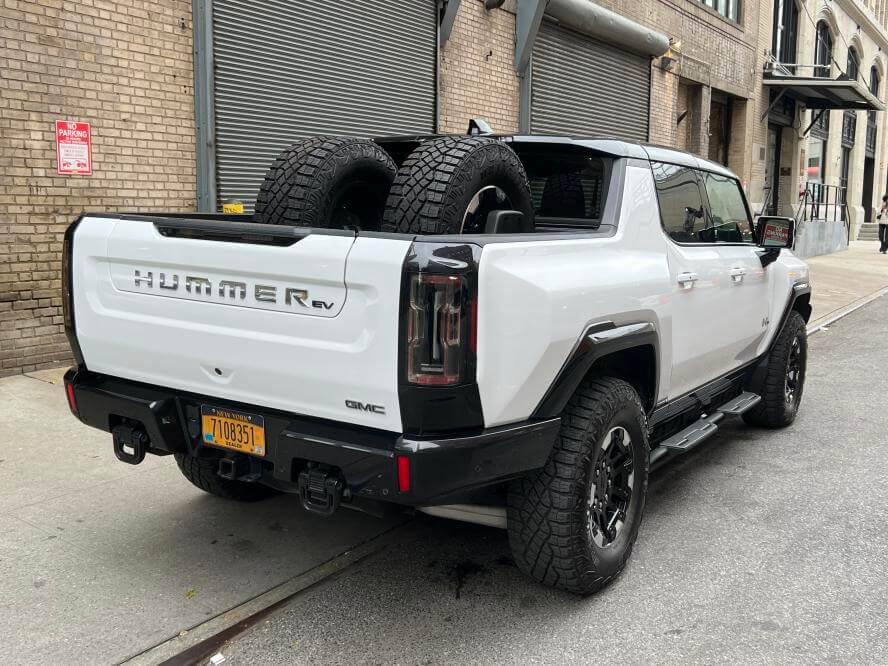
The big, bold exterior design of the Hummer in an exercise in non-restraint. One only need look at the massive light bar in the front with the glowing HUMMER EV printed on it. The truck is also over a foot wider than a Toyota Camry.

The bruising, bold look starts at the front, which is unmistakable Hummer, hearkening back to the old H1 and H2 of years past. The hulking front end with nearly flat windshield—with three windshield wipers—flows back to the full-size four door cab, and features buttress-like C-pillars that form the upper part of the truck bed.

Our tester continued the out of this word look with two massive 35-inch off-road tires in the pickup bed, capped off with GMC’s MultiPro tailgate that can fold in several stages, with one part incorporating a KICKER audio system and speakers for outdoor tunes.

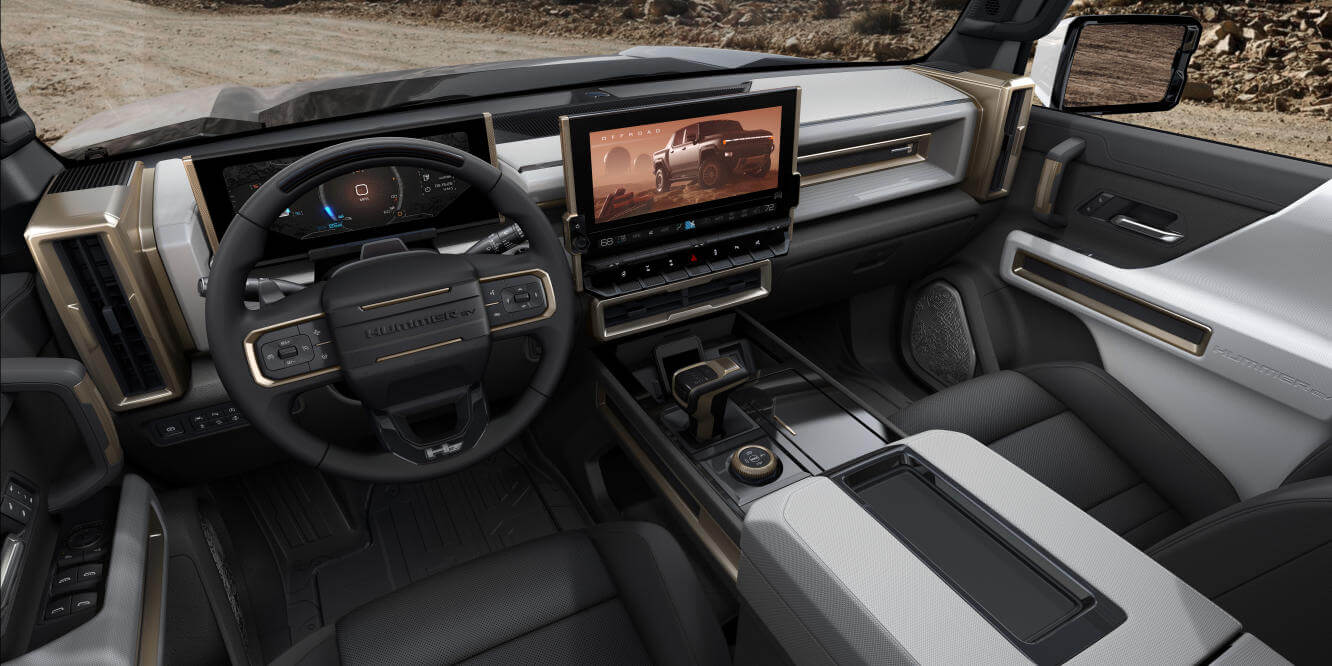
Inside the Hummer is all business – lots of right angles and hard edges, nothing rounded or curved to speak off. A prominent floating touchscreen display houses GMC’s infotainment system, which uses a Hummer specific graphical background design, mimicking the surface of the moon. There are other moon references in the vehicle, from the floor mats to the speaker covers, echoing what the GMC Hummer team dubbed their moonshot vehicle.

The drive

Hummer almost the size of a medium-duty commercial vehicle.—on New York City streets was agita inducing.

The nearly 10,000-pound Hummer was somewhat nimble; its EV powertrain made accelerating and stopping with its regenerative braking system a smooth affair. Air suspension ate up potholes when encountered, and the vast array of cameras helped with visibility.

Sure there were a couple scary moments when trying to weave through heavy traffic, or the all to common squeezing around a double-parked car on an NYC side street. But the Hummer includes rear-wheel steer to reduce its turning radius, and a party trick known as “crabwalk,” to maneuver when confines are tight, like on an off-road trail. (I actually used crabwalk to parallel park on a narrow city street.)

But out of the city is where the Hummer shined. Sitting high up like a full-size pickup, the Hummer offers a commanding view of the road. With 1000 horsepower on tap, zooming past smaller cars and weaving around traffic felt like we were breaking the laws of physics.

Yes – it’s a capable truck, and we didn’t even have the chance to take if off road and use those 35-inch tires to good use. But the hummer is more than its physical presence. It’s GM’s way of showing what’s possible with EVs, and showing a skeptical public that an EV can be the biggest, baddest thing on the road.

“Hummer bordered on an evil brand when GM finally retired it,” my co-pilot Newman said about the brand’s once reviled history. “Environmentalists despised it because it was so needlessly obnoxious, and it got single-digit mpg. It had to be the most inefficient vehicle there was when it stopped production in 2010.”

But with the Hummer being all electric, those legacy issues are now gone. “It still might be inefficient, but there are no greenhouse gasses coming out the back,” Newman added. “They’re taking a sin brand and turning it into a virtuous brand.”

And that might be GM’s real moonshot. Taking the Hummer brand out of the dustbin of history, and making it king of the hill across all of GM’s truck offerings – electric or not.

Source: finance.yahoo.com

Apple Christmas iPhone Sales Will Take Supply Chain Hit, Says JPMorgan; Cuts Price Target

Apple (AAPL) –  were active in pre-market trading Tuesday following a price target cut from analysts at JPMorgan and a muted holiday sales outlook.

JPMorgan analyst Samik Chatterjee clipped $10 from his Apple price target, taking it to $190 per share, while maintaining an ‘overweight’ rating on the stock heading into the final days of the trading year.

Chatterjee cautioned, however, that supply chain challenges, linked to the ongoing Covid disruption in China, would take some 4 million from the tech giant’s December iPhone sales, which he now pegs at around 70 million.

Last month, Bloomberg reported that Apple could see a 6 million shortfall in iPhone production from disruptions at its key China manufacturing plant, affecting mostly its high-end iPhone 14 Pro and Pro Max devices.

“We continue to see the supply shortfall continuing through year-end and impacting the typical seasonal uptick in iPhone volumes seen in Dec-Q. Thus, we are moderating our iPhone 14 Pro / Pro Max shipment forecast again in the Dec-Q,” Chatterjee said.

“We again expect the impact to estimates for FY23 overall to be more modest as we anticipate part of the shipment shortfall in the Dec-Q to be made up in the Mar-Q with supply constraints easing up in the lower production months and only a modest impact to demand given the historical precedent for Apple consumers to wait through a delay,” he added.

Apple shares were marked 0.17% higher in pre-market trading to indicate an opening bell price of $85.93 each.

Apple’s key China manufacturing hub, based in the north east city of Zhengzhou, saw violent protests in November as staff demonstrated against pay and working conditions in the 200,000-person plant run by Taiwan’s Foxconn.

Hundreds of workers were filmed in protest outside the plant, known as ‘iPhone City’, with some smashing windows and tearing down barricades, amid accusations of delayed bonus payments and dangerous working conditions linked to an earlier Covid outbreak.

The protests came shortly after Apple cautioned that Covid restrictions at the 200,000-person plant would curtail shipments of its higher-end iPhones heading into the holiday season in most of its global markets.

Apple CEO Tim Cook said in October that iPhone demand has remained healthy, but noted that supply constraints for both the 14 Pro and the 14 Pro Max continued to persist heading into the key holiday season, even prior to the added restrictions at Zhengzhou.

iPhone revenues, in fact, were an important component of Apple’s better-than-expected September quarter earnings, with sales rising 9.6% from last year to $42.62 billion.

Overall revenues, however, rose 2% from last year to an all-time high of $90.15 billion, helping Apple to a Street-beating fourth quarter earnings tally of $1.29 per share.

Source: thestreet.com

Cryptocurrencies at crossroads after annus horribilis

To borrow from Britain’s Queen Elizabeth, 2022 is not a year on which the cryptocurrency world shall look back with undiluted pleasure.

Crashes, contagion, collapses came in such quick succession that investors were, towards the end of the year, asking serious existential questions.

After all, the largest cryptocurrency, bitcoin, has not kept its head above water for more than a week at a time, and is down about three-quarters from last November’s $69,000 peak.

The market value of the 22,000-odd tokens and coins is now at less than a third of the peak $3 trillion in November 2021, and many of them are comatose, if not outright dead.

That’s been a brutal reality check for an industry that kicked 2022 off with dreams of widespread mainstream institutional adoption, of bitcoin supplanting even gold as the world’s inflation hedge, as well as endorsements from the likes of Tesla Inc chief Elon Musk and the wild celebration of billion-dollar non-fungible tokens.

Not only did cryptocurrencies get slammed by the Fed’s uber hawkishness, their slide also triggered the crash of a stablecoin called TerraUSD, that then wrought a ‘Lehman moment’ as funds and brokers such as Celsius and Voyager went bankrupt.

What some saw as the final nail in the crypto coffin was the collapse of Sam Bankman-Fried’s FTX exchange last month.

WHY IT MATTERS

Unlike in 2017, when bitcoin crashed just as spectacularly, there are far fewer diehard crypto buffs predicting a bounce this time.

Rather, 2022 has become the “I-told-you-so” case for regulators, who’ve largely maintained an arm’s length from the crypto world or even banned trading in cryptocurrencies.

The European Central Bank reckons bitcoin’s modest bounce this month is an “artificially induced last gasp before the road to irrelevance”.

Indeed, the one extenuating factor this year has been how mainstream finance has mostly escaped contagion. The excesses, the uncontrolled lending and fudging of billions of dollars have happened overwhelmingly within the crypto ecosystem.

At the same time, the idea that decentralised finance and private crypto coins can operate in the shadows of the traditional banking system, and thrive, now appears delusional.

As retail and institutional investors lose trust in crypto operators, a host of policymaker voices and even crypto barons are joining U.S. SEC Chair Gary Gensler in calling for regulation.

WHAT DOES 2023 HOLD?

UBS strategist James Malcolm points to the increasing correlation between cryptocurrencies and micro-cap U.S. stocks as testament to how bitcoin and other tokens could survive on the fringes, as a niche, diverse asset in investment portfolios.

“It’s wrong to say this thing is going to curl up and die completely because there are elements of it which can be useful in other areas, and there is probably a modest cryptocurrency market which will continue to thrive on the margin of financial markets,” he says.

Yet, the sort of regulation that investors need to feel safe dealing with crypto brokers and exchanges, be it transparency or capital adequacy, could take months, if not years to implement.

“Some asset managers are looking at this as a 10-15 year journey to digital assets becoming fully mainstream,” Morgan Stanley said in a note summarising the bank’s discussions with the crypto industry.

Next year could meanwhile see traditional financial world use the crypto malaise to up its game: snap up platforms and assets in the blockchain world, issue tokenised bonds and stocks or maybe even roll out more central bank digital currencies.

As UBS’s Malcolm says, it might just go to show that crypto was meant to be more “an evolutionary than a revolutionary development in financial markets.”

Source: reuters.com

Lucid Stock Rises as It Raises More than $1.5 billion

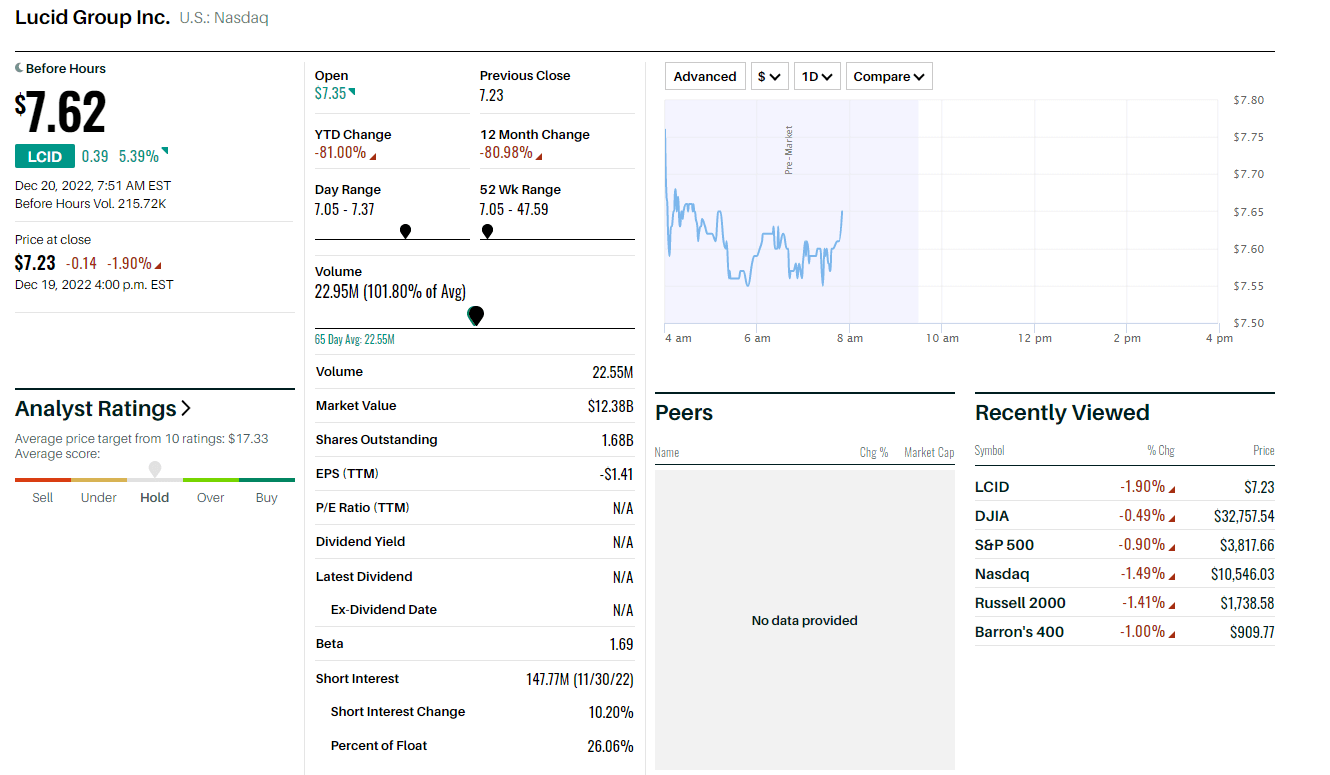
Lucid LCID –1.90% stock is rising in late trading Monday after the company said it has raised a substantial sum of money.

Monday evening, the EV startup announced it has taken in, or is about to take in, more than $1.5 billion in a couple of separate stock sales.

Lucid (LCID) sold about 56.2 million shares for about $600 million, finishing off the company’s at-the-market stock offering. An at-the-market offering allows a company to sell stock, from time to time, to raise money instead of a traditional offering where all sales are done at once and at one price.

The company is also raising $915 million in a private placement of approximately 85.7 million shares with affiliates of Saudi Arabian investment funds. The price paid for the 85.7 million shares will be the average price paid in the at-the-money stock offering. That price works out to about $10.68 a share.

Lucid stock has ranged from about $7 a share to $15 a share over the past three months.

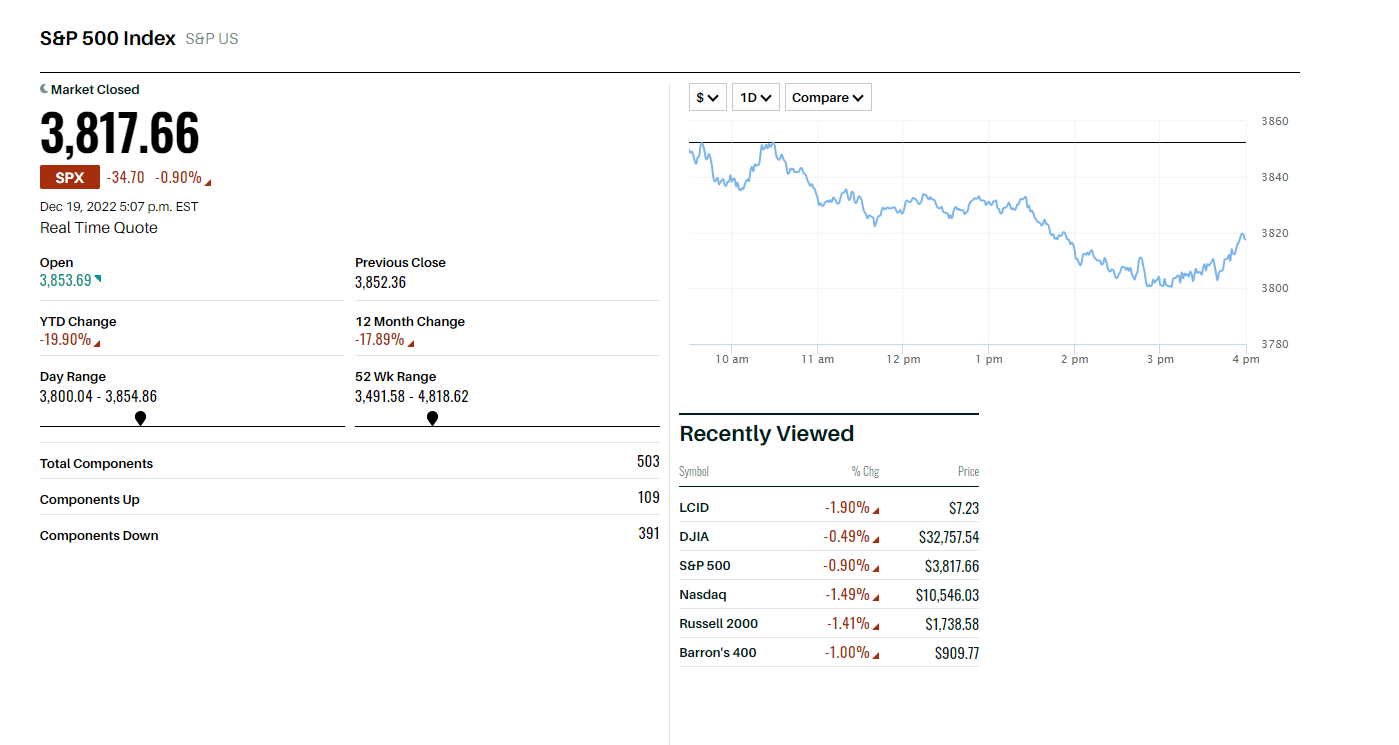
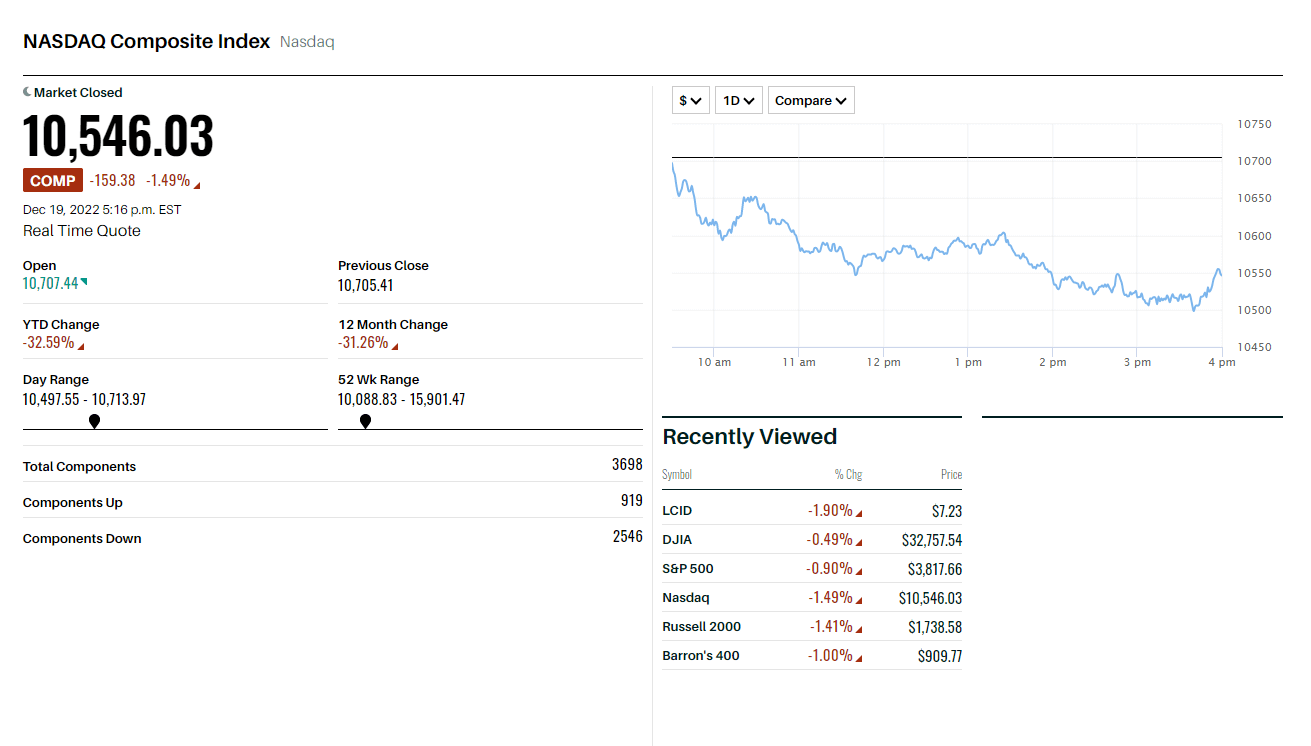
Lucid stock is up almost 5% in after hours trading Monday at about $7.57 a share. Shares dropped 1.9% in regular hours trading while the S&P 500SPX –0.90% dropped 0.9% and the Nasdaq CompositeCOMP –1.49% shed 1.5%.

Cash is important for all EV startups these days. Most aren’t generating positive free cash flow and need external capital to continue to grow their businesses.

Lucid ended the third quarter with about $3.3 billion in cash on its books. That was expected to last until, roughly speaking, the end of 2023. The new $1.5-plus billion should last until early 2024.

Lucid will need more cash at some point in the future. Wall Street projects cash usage of about $2.7 billion and $2 billion in 2024 and 2025, repsectively.

With the new stock sales, Lucid should have roughly 1.8 billion shares outstanding, up about 8%.

Lucid stock is off about 81% year to date. Rising interest rates and inflation have hit car-related stocks harder than most in 2022. Lucid has also has problems ramping up production of its new luxury EVs. The company plans to ship about 6,500 units in 2022. In the summer, Lucid thought that number would be closer to 13,000.

Source: barrons.com

401(k) and IRA Contributions: You Can Do Both

The Rules You Need to Know—Plus a Pitfall You’ll Want to Avoid.

Do you have a 401(k) plan through work? You can still contribute to a Roth IRA (individual retirement account) and/or traditional IRA as long as you meet the IRA’s eligibility requirements.

You might not be able to take a tax deduction for your traditional IRA contributions if you also have a 401(k), but that will not affect the amount you are allowed to contribute. In 2022, you can contribute up to $6,000, or $7,000 with a catch-up contribution for those 50 and over. In 2023, those amounts go up to $6,500 and $7,500.

It usually makes sense to contribute enough to your 401(k) account to get the maximum matching contribution from your employer. But adding an IRA to your retirement mix after that can provide you with more investment options and possibly lower fees than your 401(k) charges. A Roth IRA will also give you a source of tax-free income in retirement. Here are the rules you’ll need to know.

IRA Eligibility and Contribution Limits

The contribution limits for both traditional and Roth IRAs are $6,000 per year, plus a $1,000 catch-up contribution for those 50 and older, for tax year and 2022. In 2023, the limits are $6,500 for those under age 50 and $7,500 for those ages 50 and up.

You can split your contributions between different types of IRAs, for example by having both a traditional and a Roth IRA. But your total contribution cannot be higher than the limit for that year. Traditional and Roth IRAs also have some different rules regarding your contributions.

Traditional IRAs

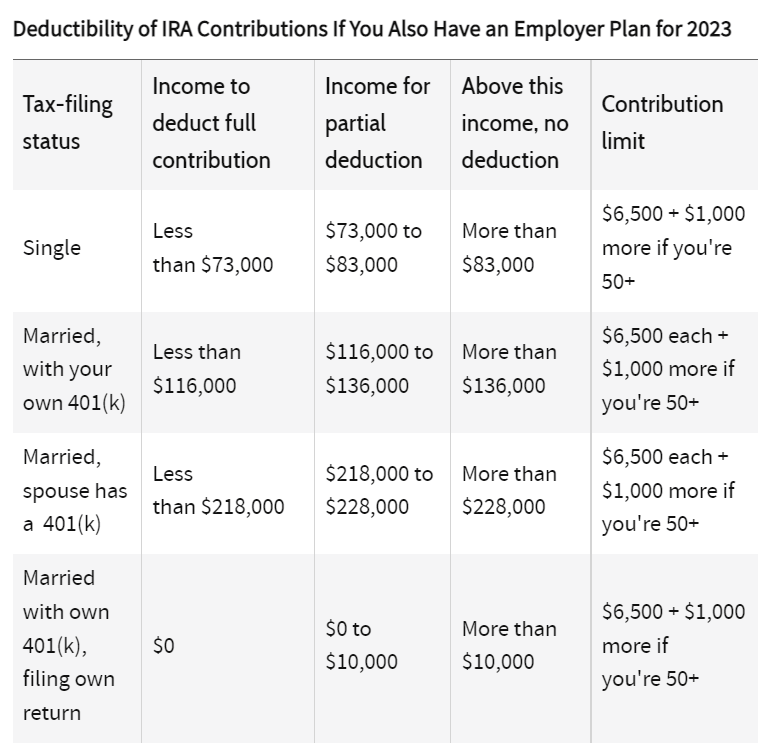
Contributions to a traditional IRA are often tax-deductible. But if you are covered by a 401(k) or any other employer-sponsored plan, your modified adjusted gross income (MAGI) will determine how much of your contribution you can deduct, if any.

The following tables break it down:

IRS Publication 590-A explains how to calculate your deductible contribution if either you or your spouse is covered by a 401(k) plan.

Even if you don’t qualify for a deductible contribution, you can still benefit from the tax-deferred investment growth in an IRA by making a nondeductible contribution. If you do that, you will need to file IRS Form 8606 with your tax return for the year.

Roth IRAs

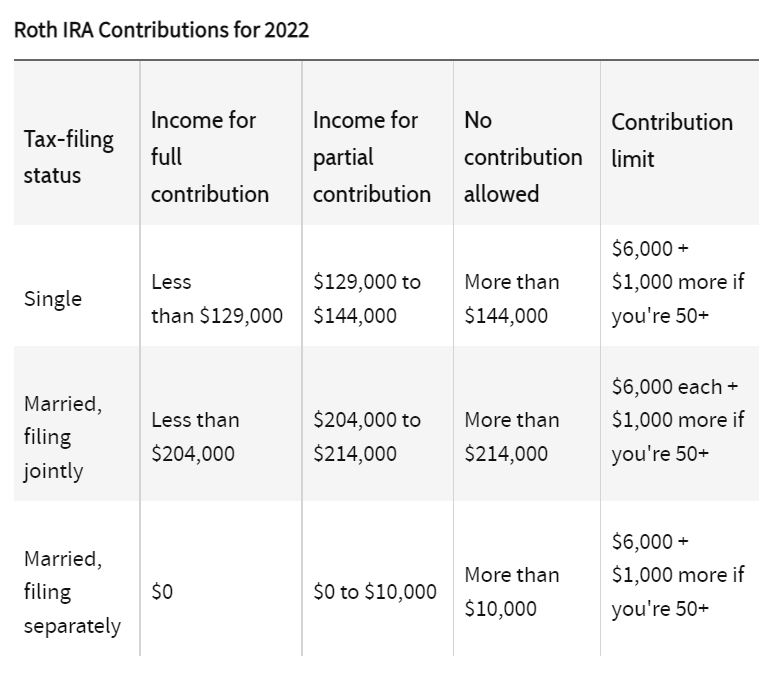
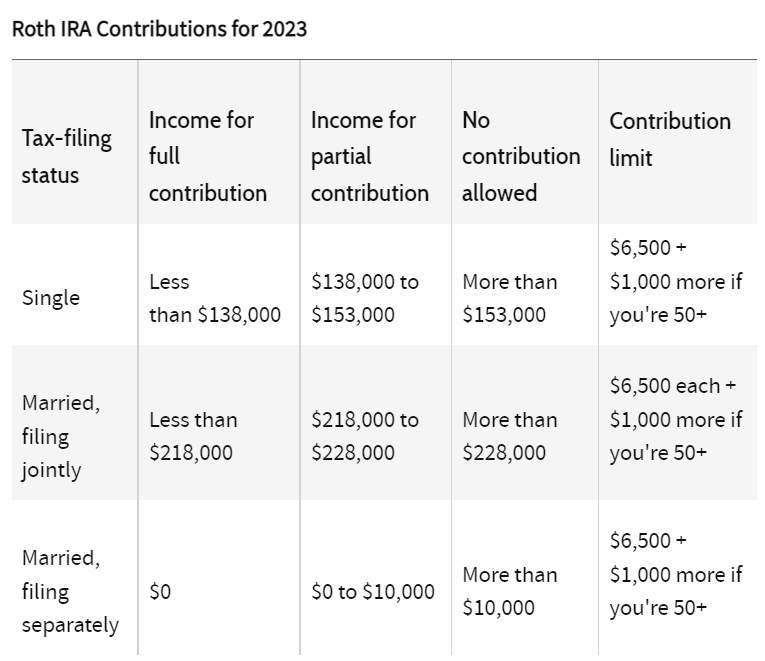
Roth IRAs provide no upfront tax benefit, and it doesn’t matter whether you have an employer plan. How much you can contribute, or whether you can contribute at all, is based on your tax-filing status and your income for the year.

This table shows the current income thresholds:

Spousal IRAs

You must have earned income to contribute to an IRA. However, there’s an exception for married couples where only one spouse works outside the home. That’s a spousal IRA. It allows the employed spouse to contribute to an IRA of a nonworking spouse and as much as double the family’s retirement savings. You can open a spousal IRA as either a traditional or a Roth account.

What if You Contribute Too Much?

If you discover that you contributed more to your IRA than you’re allowed, you’ll want to withdraw the amount of your overcontribution—and fast. Failure to do so in a timely way could leave you liable for a 6% excise tax every year on the amount that exceeds the limit.

The penalty is waived if you withdraw the money before you file your taxes for the year in which the contribution was made. You also need to calculate what your excess contributions earned while they were in the IRA and withdraw that amount from the account, as well.

The investment gain must also be included in your gross income for the year and taxed accordingly. What’s more, if you are under 59½, you’ll owe a 10% early withdrawal penalty on that amount.

Source: investopedia.com
Amazon goes TikTok. Here’s how it will work.

Amazon (AMZN) has begun rolling out a short-form video and photo feed in its app.

Though the feature, called Inspire, immediately drew comparisons to TikTok, Oliver Messenger, director of Amazon Shopping, told that it wasn’t TikTok’s success that encouraged the company to build Inspire – it was customer feedback.

“We spend a lot of time listening to customers,” said Messenger. “We have survey sessions, we have usability labs, and there are also ways within the app and website that lend themselves to actually submit feedback. This was something that we noticed people were asking for repeatedly.”

To be sure, the app’s interface certainly looks TikTok-esque. And the fact that Amazon’s wading into short-form video certainly reflects how just how popular the format has become.

However, Amazon’s Inspire is a different project than TikTok itself in key ways, according to the company. For one thing, Amazon Inspire looks to solve a longstanding pain point in Amazon’s marketplace – that it’s a place where it’s easy to find what you know you want— but hard to find something you didn’t know you wanted.

Amazon has been taking steps to solve this, particularly through its Amazon Influencer Program which allows content creators to review and endorse products on Amazon. Inspire is building on that, said Messenger.

“Customers, on one hand, were asking for this serendipitous, more open-ended way to shop,” he said. “We have this awesome section of [influencer] content that we’re continuing to get in, as well. We sort of melded the two and made it personalized and tailored.”

Inspire looks to to bolster and build on Amazon’s existing influencer content, which spans products from fitness to fashion to cooking. If you’re, say, looking for a pan, Amazon wants to help you, with the aid of its influencer content, find the right one for you.

“More immersive?”

Amazon’s not the only Big Tech name that’s looking to capitalize on TikTok’s success. Google-owned (GOOG, GOOGL) YouTube launched YouTube Shorts to compete with TikTok. In February, Meta (META) unveiled its Instagram Shorts feature globally.

Amazon’s goal: Inspire will eventually help set up a “more immersive” shopping experience on Amazon’s app, one where discovery is built-in. The company hopes this can make the Amazon Shopping app somewhere you might just, well, hang out more. For instance, if you’re looking for earrings, Amazon wants to be the place where you not only buy earrings, but where you will figure out which ones you want.

“It’s streamlined in the sense that it’s tailored to you and your interests,” said Messenger. “When you start up Inspire, we ask you: What are you interested in? What do you want to see? You can create, cite your hobbies or types of things you’re into—and your feed will learn from that.”

To get started, customers in the Amazon Shopping app will tap a “lightbulb” icon, and will then choose their interests to inform their feed.

“It’s also deliberately not streamlined in the sense that we’ll show you content that you maybe didn’t expect from a range of brands, creators, and customers in line with those interests, but it’s content that you may not…have found yourself,” Messenger added.

Amazon Inspire is currently available only to select customers; its launch began in early December. The feature will be available to all Amazon customers sometime next year, and the current goal is Q1, according to Messenger.

Inspire will, of course, be operating in an increasingly crowded short-form video marketplace; TikTok, owned by Beijing-based ByteDance, has thus far remained the platform to beat as its grown more adept at not only facilitating engagement, but at optimizing advertising, according to Insider Intelligence.

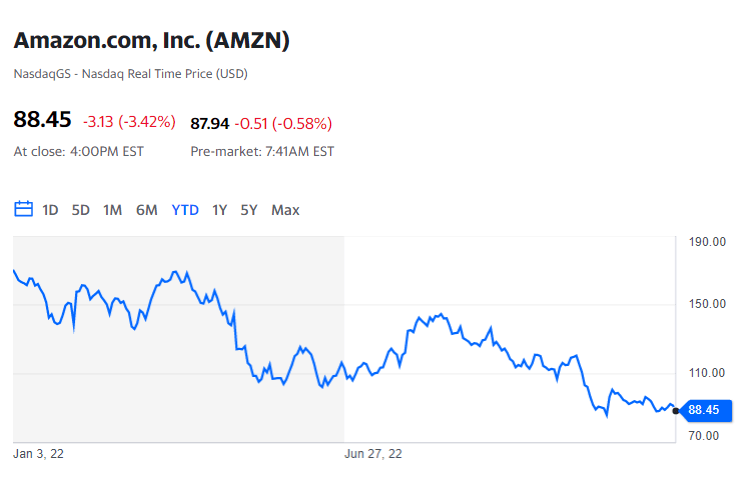
Amazon shares are down about 44% year-to-date, as of market open Thursday.

Source: finance.yahoo.com

History says the Fed can’t meet its inflation goal without a recession

Forget about a soft landing in 2023.

Should the Fed achieve its goal of reducing inflation, it’s all but guaranteeing a punishing recession next year caused by a rapidly deteriorating labor market.

As Myles Udland laid out in Thursday’s Morning Brief, Fed Chair Powell strained credulity at his latest press conference while attempting to make the case for a potential soft landing next year that sees inflation come down without the economy contracting.

Powell struggled to fit the FOMC’s own predictions about the economy next year into a narrative that avoids a hard landing — or recession.

Powell hammered home the strong job market and didn’t mince words when he said, “There’s an imbalance in the labor market between supply and demand,” noting that it will take a “substantial period” to get the labor market back in equilibrium.

At issue for the Fed has been inflation, which is currently running well above its 2% target.

In November, headline inflation as measured by the Consumer Price Index (CPI) came in at 7.1% over the prior year. In June of this year, inflation topped out north of 9%.

The Fed’s forecasts released on Wednesday showed inflation slowing next year as unemployment rises. But with inflation standing at 3.5% by year-end 2023, the Fed’s own projections show prices still rising at an unacceptable rate.

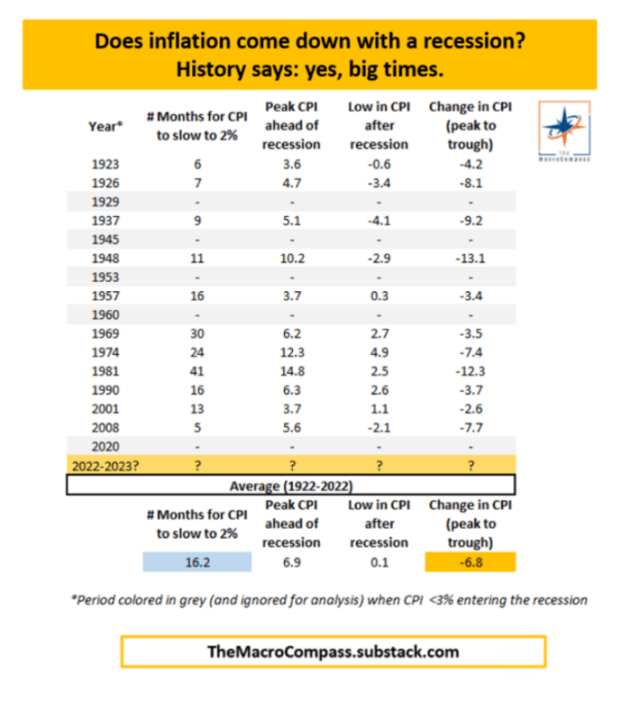
And as Alfonso “Alf” Peccatiello at The Macro Compass notes, one surefire way to bring down inflation is a recession.

Since 1960, every recession except the pandemic-induced downturn of 2020 kicked off with inflation running at 3.7% or hotter. And only in 1974 did the recession end with inflation higher than 2.7%.

Also at issue for Powell and the Fed is that despite insisting 0.5% GDP growth in 2023 offers evidence refuting recession suggestions inferred from their forecasts, the labor market outlook is less ambiguous.

The Sahm Rule is a relatively new Fed model which has correctly predicted the last nine recessions and done so much faster than they were officially declared in real time. The recession alert is triggered when the three-month moving average of the unemployment rate moves over 0.50% above its lowest low of the last 12 months.

The current 12-month low in unemployment is 3.5%. So if and when the 3-month average climbs above 4.0%, that would suggest the economy is already in recession.

Even if we mark this local low from November’s unemployment rate of 3.7% and move the Sahm Rule trigger to 4.2%, the Fed’s outlook still looks hairy. The Fed is predicting an unemployment rate of 4.6% by the end of next year, so it’s easy to see where the fault in the central bank’s argument lies.

But if we take Powell’s comments and the Fed’s forecasts together, we see any anti-recession arguments end up being mostly academic.

The goal for this Fed is to bring down inflation, and bring it down in a big way.

“Without price stability, the economy doesn’t work for anyone,” Powell said Wednesday.

“There will be some softening in labor market conditions,” Powell said. “And I wish there were a completely painless way to restore price stability. There isn’t. And this is the best we can do.”

Source: finance.yahoo.com