Roth IRA Conversion Rules

A Roth IRA can be a great place to stash your retirement savings. Unlike a traditional IRA, you won’t have to pay income tax on the money you withdraw or be required to take a minimum amount from your account each year after you reach a certain age.

These retirement accounts are available to just about everyone. While you can’t contribute to a Roth IRA if your income exceeds the limits set by the IRS, you can convert a traditional IRA into a Roth—a process that’s sometimes referred to as a “backdoor Roth IRA.”Read on to learn about Roth IRA conversion rules that you may be able to use.

Roth IRA Conversion Rules

Converting all or part of a traditional IRA to a Roth IRA is a fairly straightforward process. The IRS describes three ways to go about it:

  1. A rollover, in which you take a distribution from your traditional IRA in the form of a check and deposit that money in a Roth account within 60 days
  2. A trustee-to-trustee transfer, in which you direct the financial institution that holds your traditional IRA to transfer the money to your Roth account at another financial institution
  3. A same-trustee transfer, in which you tell the financial institution that holds your traditional IRA to transfer the money into a Roth account at that same institution

Of these three methods, the two types of transfers are likely to be the most foolproof. If you take a rollover and, for whatever reason, don’t deposit the money within the required 60 days, you could be subject to regular income taxes on that amount plus a 10% penalty. The 10% penalty tax doesn’t apply if you are over age 59½.

Whichever method you use, you will need to report the conversion to the IRS using Form 8606: Nondeductible IRAs when you file your income taxes for the year.

Tax Implications of Converting to a Roth IRA

When you convert a traditional IRA to a Roth IRA, you will owe taxes on any money in the traditional IRA that would have been taxed when you withdrew it. That includes the tax-deductible contributions you made to the account as well as the tax-deferred earnings that have built up in it over the years. That money will be taxed as income in the year you make the conversion.

Roth Conversion Limit

At present, there are essentially no limits on the number and size of Roth conversions you can make from a traditional IRA. According to the IRS, you can make only one rollover in any 12-month period from a traditional IRA to another traditional IRA. However, this one-per-year limit does not apply to conversions where you do a rollover from a traditional IRA to a Roth IRA.

So if you wish, you can roll over all your tax-deferred savings at once. However, this approach is generally not advisable because it could push some of your income into a higher marginal tax bracket and result in an unnecessarily hefty tax bill.

Usually, it’s wise to execute the conversion over several years and, if possible, convert more in years when your income is lower. Adopting this strategy could result in paying less tax on each additional dollar of converted money. Stretching transfers out may also reduce the risk that your taxable earnings will be too high for you to qualify for certain government programs.

Another good time to convert: when the stock market is in bad shape and your investments are worth less.

Backdoor Roth IRAs

In 2022, Roth IRA contributions were capped at $6,000 per year, or $7,000 per year if you were 50 or older. For 2023, maximum Roth IRA contributions are $6,500 per year, or $7,500 per year if you are 50 or older. These limits do not apply to conversions from tax-deferred savings to a Roth IRA.

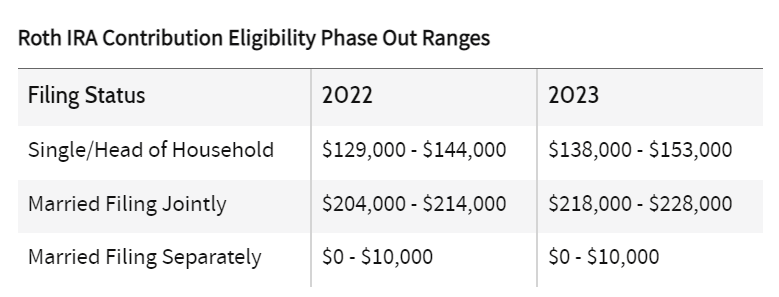
In addition, people whose incomes exceed a certain amount may not be eligible to make a full (or any) contribution to a Roth.

However, people in that situation can still convert traditional IRAs into Roth IRAs—the strategy known as a “backdoor Roth IRA.”
Beware of the 5-Year Rule

One potential trap to be aware of is the so-called “five-year rule.” You can withdraw regular Roth IRA contributions tax- and penalty-free at any time or any age. Converted funds, on the other hand, must remain in your Roth IRA for at least five years. Failure to abide by this rule will trigger an unwelcome 10% early withdrawal penalty.

The five-year period starts at the beginning of the calendar year that you did the conversion. So, for example, if you converted traditional IRA funds to a Roth IRA in November 2022, your five-year clock would start ticking on Jan. 1, 2022, and you’d be able to withdraw money without penalty anytime after Jan. 1, 2027.

Remember, this rule applies to each conversion, so if you do one in 2023 and another in 2024, the latter transfer will need to be held in the account for a year longer to avoid paying a penalty.

Does a Roth IRA Conversion Make Sense for You?

When you convert from a traditional IRA to a Roth, there’s a tradeoff. You will face a tax bill—possibly a big one—as a result of the conversion, but you’ll be able to make tax-free withdrawals from the Roth account in the future.

One reason that a conversion might make sense is if you expect to be in a higher tax bracket after you retire than you are now. That could happen, for example, if your income is unusually low during a particular year (such as if you’re laid off or your employer cuts back on your hours) or if the government raises tax rates substantially in the future.

Another reason that a Roth conversion might make sense is that Roths, unlike traditional IRAs, are not subject to required minimum distributions (RMDs) after you reach age 73 (starting in 2023) or 75 (starting in 2033). So, if you’re fortunate enough not to need to take money from your Roth IRA, you can just let it continue to grow and leave it to your heirs to withdraw tax-free someday.

Moreover, you can continue to contribute to your Roth IRA regardless of your age, as long as you’re still earning eligible income. Since January 2020, you can also keep contributing to a traditional IRA (previously you had to stop at age 70½).

How Much Tax Will I Pay If I Convert My Traditional IRA to a Roth IRA?

Traditional IRAs are generally funded with pretax dollars; you pay income tax only when you withdraw (or convert) that money. Exactly how much tax you’ll pay to convert depends on your highest marginal tax bracket. So, if you’re planning to convert a significant amount of money, it pays to calculate whether the conversion will push a portion of your income into a higher bracket.

Is There a Limit to How Much You Can Convert to a Roth IRA?

You can convert as much as you like from a traditional IRA to a Roth IRA, although it’s sometimes wise to spread these transfers out for tax purposes.

What Happens When You Convert to a Roth IRA?

When you convert a traditional IRA to a Roth IRA, you pay taxes on the money you convert in order to secure tax-free withdrawals as well as several other benefits, including no required minimum distributions, in the future.

What Is the Downside of Converting From a Traditional IRA to a Roth IRA?

The most obvious downsides are the hit to your current tax bill—your IRA withdrawal amount will count as taxable income for that year—and that you can’t touch any of the money you convert for at least five years—unless you pay a penalty.

The Bottom Line

Converting a traditional IRA or funds from a SEP IRA or SIMPLE plan to a Roth IRA can be a good choice if you expect to be in a higher tax bracket in your retirement years. To reduce the tax impact as possible, it may be advisable to split conversions of large accounts over several years or wait until your income or the assets’ values are low. Either way, converting your investments to a Roth allows your earnings to grow and eventually be distributed tax-free, potentially saving you thousands of dollars in the long run.

Source: investopedia.com
A net-zero world could generate $10.3 trillion by 2050, new report finds

The green transition could spur huge economic gains as the world looks to curb climate change, a new report finds.

A study from Oxford Economics and Arup estimated that green industries could add $10.3 trillion to the world’s economy — or 5.2% of global GDP — by 2050 under a net-zero scenario.

The report made the case that governments and businesses, under increasing pressure from costly climate-related weather events, may begin to see a rapid transition away from fossil fuels as a net positive as well as a way to avoid climate disruptions.

“Fear is a compelling reason to act on climate change, but we believe human ambition can be another critical driver of environmental action,” Brice Richard, global strategy skills leader at Arup, wrote. “This report shows the green transition is not a burden on the global economy, but a substantial opportunity to bring about a greater and more inclusive prosperity.”

There are three reasons why a green transition could add sizable value to the global economy, the report found. First, the switch to clean energy will create new areas of competition. Second, green markets will emerge. And third, the world could benefit from higher productivity relative to a scenario in which insufficient action is taken on climate change.

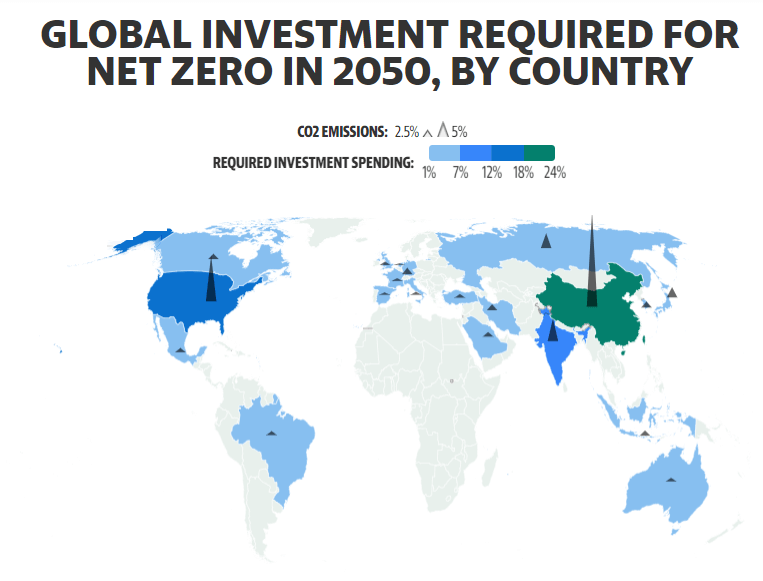
However, realizing that $10 trillion requires that governments enact measures to incentivize private-sector investment such as research tax credits and co-financing. It is estimated that hundreds of trillions of dollars in public and private capital will need to be deployed to reach net zero.

“As economists, we have to be honest about the fact that mitigating climate change will be expensive,” Oxford Economics CEO Adrian Cooper said in a statement. “But the transition to a carbon-neutral global economy also presents compelling opportunities.”

Currently, just 16% of climate investment needs are being met, according to the Rockefeller Foundation. That gap in investment has also meant that, so far, the world is falling short of its pledges to cut carbon emissions and limit climate change.

The scenario in which the world generates $10 trillion from green industries is one in which the world reaches net zero by 2050, a goal set out in the Paris Agreement to keep global heating to 1.5 degrees Celsius by the end of the century.

Current policies put the world on track to warm by 2.6-2.9 degrees Celsius by 2100, relative to pre-industrial levels. When factoring in current pledges made by countries, it puts the earth on a pathway of 2 degrees of warming.

‘A new competitive landscape will emerge’

With the transition underway, industries could unlock returns by investing in green infrastructure, renewable energy, and talent pools, which may also cut costs and reduce risk over the long term. Companies catering to changing consumer demand for more sustainable products may also benefit.

Yet, capturing that first-mover advantage could also be costly in the near term through the purchase of new equipment and training workers.

“The transition will be costly and painful for certain enterprises, industries, and economies,” the authors wrote. “But in a transition to a net zero emissions environment by 2050, under a rapid transition away from carbon-intensive activities, a new competitive landscape will emerge. In many sectors, this requires a fundamental shift to consuming renewable fuels and energy. In others, new green equipment and technology will be needed in production. All sectors will experience short-term costs but the chance of earning large rewards over the medium- and long-term horizons.”

At the same time, new markets will emerge that could become engines of economic growth.

Electric vehicles, for instance, represent a $3.4 trillion opportunity by 2050, the report found. Specifically, the authors noted that EV production — which includes motorbikes, cars, and industrial vehicles — will contribute $1.47 trillion by 2050 while the supply chains for these manufacturers will add $1.87 trillion by that year.

Other new markets include renewable electricity production (worth $5.3 trillion by 2050), renewable fuels ($1.1 trillion), clean energy equipment ($316 billion), and green finance ($90 billion).

Different countries will need to play to their strengths to reap rewards from the green transition, and in some cases, advantages will be found in more niche markets with fewer competitors. For example, Singapore has capitalized on sustainable food production while Indonesia has been experimenting with battery-swapping technology for electric bikes.

“There will be fortunes made, crudely, solving these problems,” Will Day, fellow at the Cambridge Institute for Sustainability Leadership, wrote. “There will be fortunes lost by those who don’t understand the context and don’t invest wisely or stay too late.”

Source: finance.yahoo.com

3 Growth Stocks Down More Than 80% That Are Screaming Buys in January

Down massively from their highs, these underappreciated stocks look like great buys.

Macroeconomic challenges have reshaped the way the market is thinking about growth stocks. Despite what recent performance might suggest, some stocks that are down more than 80% from their highs are actually backed by promising companies with serious rebound potential. Putting your investment dollars behind the best of them could be a path to stellar long-term returns.

Here’s why investing in these three beaten-down stocks could be a great move to start the new year.

1. Cloudflare

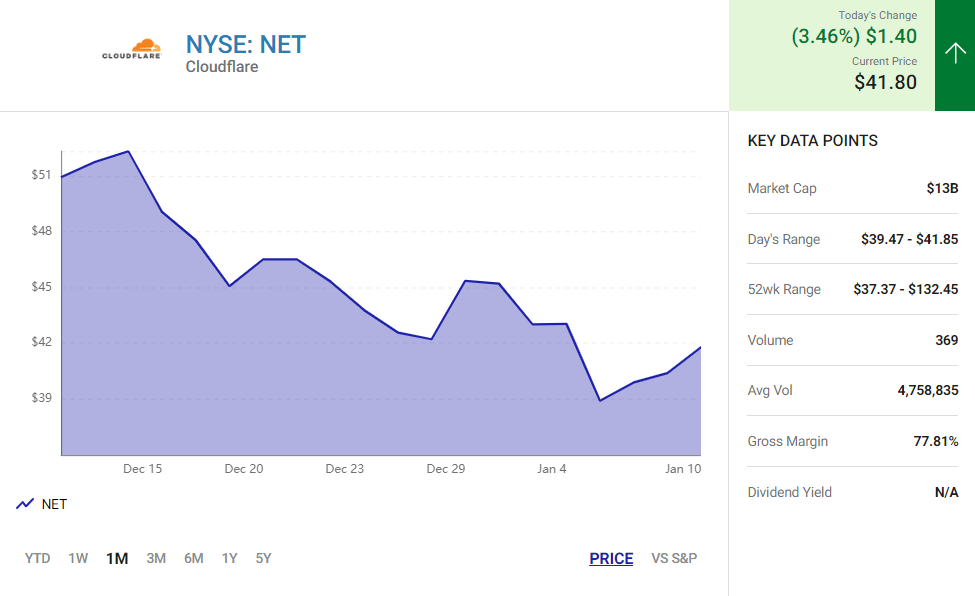
Cloudflare (NET 3.46%) is the world’s leading provider of protection against distributed-denial-of-service (DDoS) attacks. Without these kinds of technologies, bad actors can flood servers with a barrage of access requests that results in a shutdown. The company also provides content-delivery-network (CDN) services that use edge computing to speed up the rate at which information can be sent and received around the globe.

The company ended the third quarter with 1,908 customers generating more than $100,000 in annualized sales, up from 451 in the third quarter of 2019 and good for a compound annual growth rate of 61% over the last two years.

Cloudflare posted a net revenue retention rate of 124% in the third quarter, which means that existing customers increased their spending on its services by 24% compared to the prior-year period. That’s a strong indication that customers are getting great value from the company’s software, and the web services specialist has been having plenty of success attracting new customers as well.

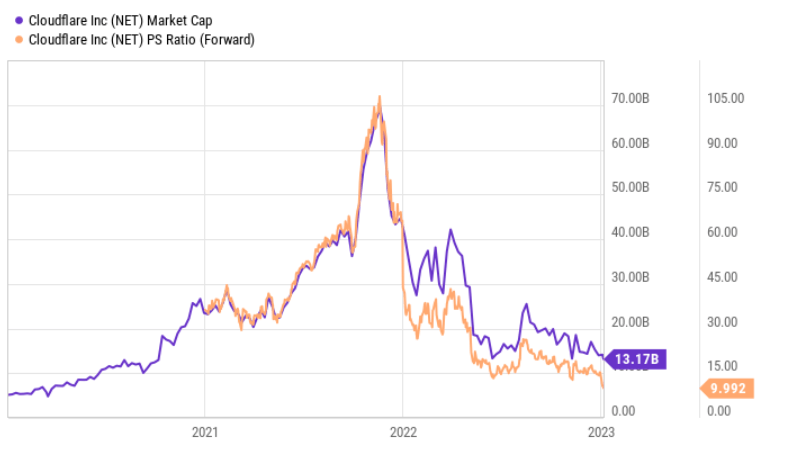
Amid dramatic valuation pullbacks for growth stocks at large, Cloudflare stock now trades down roughly 81% from its all-time high. With the company sporting a market capitalization of roughly $13.2 billion and trading at approximately 10 times this year’s expected sales, the company still has a growth-dependent valuation that could set the stage for more volatility in the near term, but the stock looks poised to be a big winner for long-term investors.

2. Fiverr International

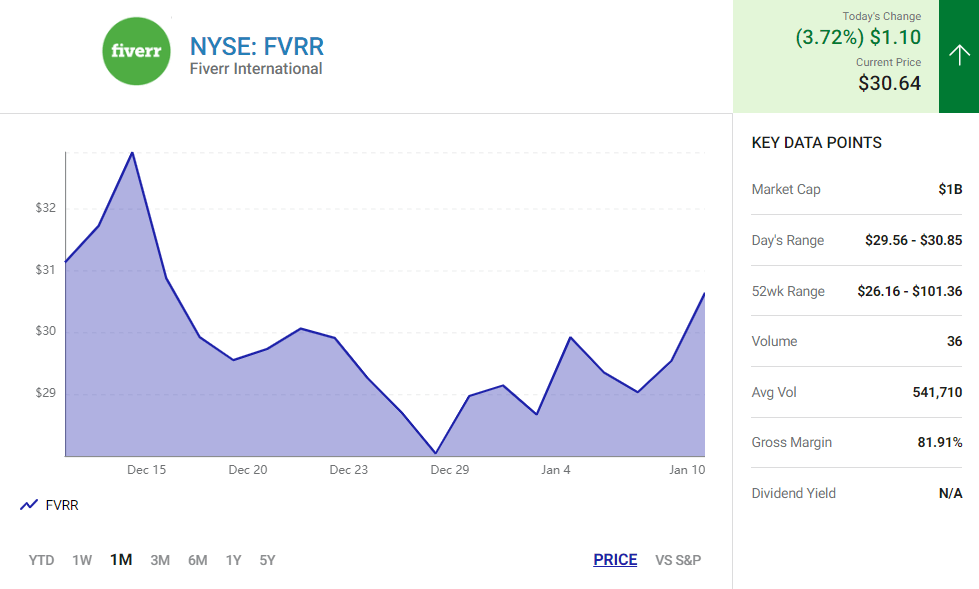
Fiverr International (FVRR 3.72%) operates a marketplace that connects freelance workers with those looking to hire contractors. With the coronavirus pandemic briefly shuttering many offices and then spurring the adoption of increased work-from-home operations, the company’s platform enjoyed surging demand — and its share price was bid up to dizzying levels. Now, the economic backdrop has shifted, and the gig-labor specialist has seen slowing sales growth and a dramatic pullback in its valuation.

While Fiverr’s third-quarter year-over-year revenue growth of roughly 11% came in far below the rates of expansion it had posted in preceding years, the company still managed to maintain positive momentum along key metrics.

The number of active buyers on its platform increased 3% compared to the prior-year period to reach 4.2 million, and average spending per buyer increased 12% year over year. The company’s take-rate, which is a measure of how much the company takes from each job completed through its platform, also hit 30% — up from 28.4% in the prior-year period.

The company also recorded an 81.1% gross margin in the quarter, down from 83.3% in Q3 2021 but still quite impressive in its own right. Non-GAAP (adjusted) earnings per share also rose roughly 9.5% year over year to reach $0.23.

Despite probable continued economic slowdown in the near term, the gig economy looks poised for long-term growth — and Fiverr is on track to play a key role in its evolution. With the stock down roughly 91% from its high, Fiverr could go on to be an explosive winner for patient investors.

3. Roku

Roku (ROKU 4.27%) is another stock that saw a huge valuation run-up driven by pandemic-related conditions. In addition to the low-interest rate environment that helped bullish momentum for growth stocks, the streaming-technologies company benefited from social-distancing and shelter-in-place conditions, causing people to spend extra hours indoors streaming their favorite shows and movies. But those tailwinds have now receded, and Roku stock trades down 91% from its peak valuation level.

With the company’s market capitalization pushed down to roughly $5.8 billion, Roku is now valued at just 1.8 times expected forward sales.

Admittedly, the multiple contraction isn’t entirely unwarranted. After growing sales 51% year over year in Q3 2021, revenue growth in last year’s quarter came in at a much less flashy 12%.

While Roku’s growth has decelerated significantly, the company still managed to increase average revenue per user roughly 10% year over year in the third quarter, and there are other signs that the company’s long-term growth story is far from over. Roku recently announced that it had reached more than 70 million global active accounts, and it should be able to persevere despite facing a more challenging advertising market in the connected television space.

With macroeconomic headwinds on the horizon, Roku probably won’t be posting meaningful profits in the near future, but the company has a sturdy balance sheet, with roughly $2 billion in cash and equivalents and no long-term debt. While the streaming player is facing a combination of macro headwinds and competition across multiple levels of its industry, Roku has a strong installed base and solid engagement numbers.

Source: nasdaq.com

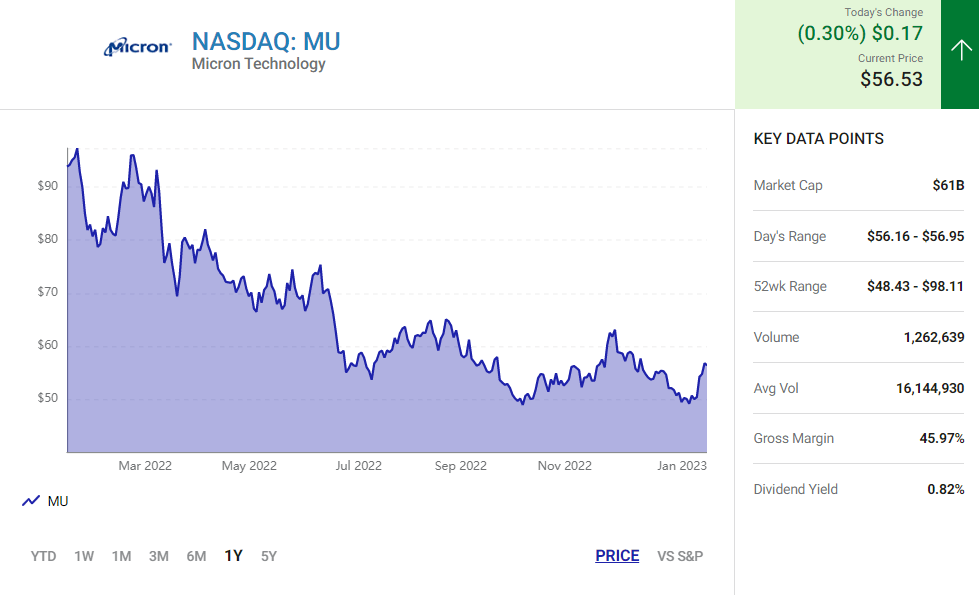
Micron Faces Long Downturn as Samsung Keeps Investing

The market leader isn’t slowing down as the memory chip market worsens.

The memory chip markets are in severe oversupply, the worst imbalance since the financial crisis. The entire supply chain is drowning in inventory, and some manufacturers are aggressively cutting production and slowing down capital spending plans in efforts bring the situation back under control.

One of those manufacturers pulling back is Micron (MU 0.30%). The company expects capital expenditures related to wafer fab equipment to plunge more than 50% year over year in fiscal 2023, with the number falling further in fiscal 2024. Micron has also reduced wafer starts by around 20%, enacted major cost cuts, and is slowing the production ramp of new process nodes.

Micron isn’t doing this in a vacuum. Some other manufacturers are taking similar measures, but it only takes one to spoil things. That spoiler this time around appears to be market leader Samsung (SSNL.F -28.17%).

No plans to pull back

Samsung is the world’s largest producer of DRAM and NAND memory chips, and it’s suffering just as much as other manufacturers as demand and prices plunge. The company warned last week that its fourth-quarter profits would plunge as memory chip markets struggled. Samsung expects to report consolidated operating profit of roughly 4.3 trillion Korean won, down from 13.9 trillion Korean won in the prior-year period.

There has been no indication that Samsung is cutting back on production or capital spending plans. In October, the company said that its supply of memory chips would grow faster than peers as it continued to follow its previous investment plans. Samsung will begin mass producing DRAM on its new 12nm process node in 2023, and unlike Micron, it doesn’t appear to be slowing any plans for future migrations.

DigiTimes reported in late December that Samsung was likely to initiate big price cuts on its memory chips in 2023 in an effort to gain market share. The company is already being more aggressive on pricing than its peers. DRAMeXchange reported on Monday that Samsung was the only major DRAM supplier to see a slight drop in its inventory levels because of its pricing strategy.

Samsung could change course as its profits fall off a cliff, but if the company sticks with its plans, the memory chip downturn could drag on for quite a while. DRAMeXchange expects overall per-bit DRAM prices to drop between 13% and 18% sequentially in the first quarter of 2023, with production cuts from Micron and others not nearly enough to prevent a double-digit decline.

Samsung is playing the long game

Moving to more advanced process nodes is one way memory chip manufacturers lower per-bit costs. That’s critical, because per-bit memory chip prices generally fall over time.

Micron slowing its process node transitions will help save cash now, but it could put the company at a disadvantage once the memory chip markets recover. If Samsung follows through on its plans without significant cuts or slowdowns in 2023, it will certainly benefit the company in the long run. Once the inventory glut is resolved and demand recovers, not only will Samsung have the capacity to meet that demand, but it will likely be able to do so at a lower cost-per-bit compared to its competitors.

Samsung will report its full fourth-quarter results on Jan. 31. If the company sticks with its capital spending and production plans despite plunging profits, it will all but guarantee a deep and long downturn in the memory chip markets and a rough 2023 for Micron.

Source: fool.com

CES 2023: Amazon to boost Alexa’s capabilities despite cuts to the business

At this year’s CES, Amazon (AMZN) is announcing efforts to build out Alexa’s capabilities, a move that comes just a few months after slashing the division’s workforce.

To start, Alexa will launch a number of EV charging features. For instance, consumers will now be able to use Alexa to find the nearest EV charging stations by saying, “Alexa, find an EV charging station.” EV charging operator EVgo (EVGO) and Amazon also partnered to enable voice-initiated payments, in which users will also be able to pay for their car charge by saying, “Alexa, pay for my charge.”

“The EV charging experience is a lot more fragmented than for gas customers, who can pretty much stop at any location,” said Amazon Smart Vehicles VP Anes Hodžić in a statement. “[So] we created a comprehensive, end-to-end experience that helps EV drivers search for—and navigate to—an available charging station and pay for the charge all at once.”

When Amazon laid off 10,000 of its corporate workforce in November, about 3% of its corporate workforce, many of those layoffs were in the company’s Alexa division. This news is perhaps not un-related – As the company’s reportedly downsizing its Alexa operation, it makes sense that Amazon would seek alternative ways to build out Alexa.

Alexa developers are getting new features and tools


Amazon also revealed the first features of its Alexa Ambient Home Dev Kit, which allows third-party developers to build out their own apps for the smart home device.

The new features of the Alexa Ambient Home Dev Kit include credentials sharing, group sync, and two-way device sync. The company also announced a new developer tool called the Matter Analytics Console, which offers metrics by which app developers can assess the “quality of service customers experience when interacting with their devices using Alexa,” per a statement. Matter is Amazon’s standard that seeks to bring all smart home tech together, so consumers don’t end up with too many apps on too many different devices.

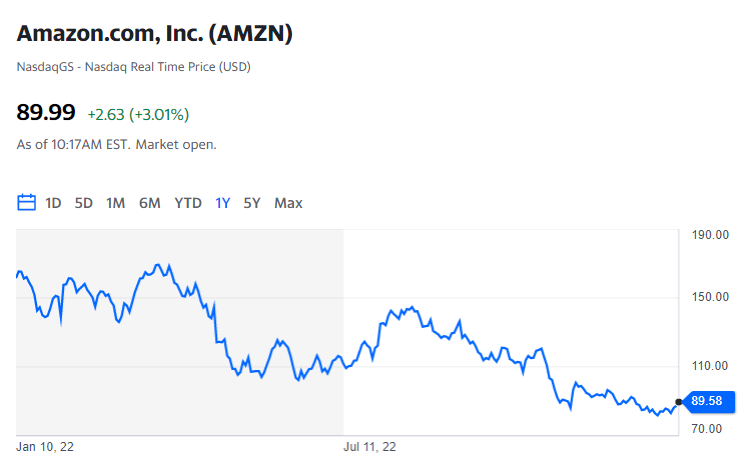
Amazon is coming off a rough year, with shares dropping about 48% over the course of 2022. The company, like other big tech names, contended with softened consumer demand, high inflation, and rising interest rates. Still, Amazon was hit harder than many. Comparatively, the tech-heavy Nasdaq (^IXIC) is down approximately 30% in the last 12 months.

Source: finance.yahoo.com

Bitcoin or gold? Beware the ‘malignant tumor,’ says ‘Black Swan’ guru Nassim Nicholas Taleb

Is Bitcoin or gold the better investment? Opinions vary widely, with billionaire crypto fan Mark Cuban favoring Bitcoin—and slamming gold—and Euro Pacific Capital CEO Peter Schiff going the other way.

Nassim Nicholas Taleb has some thoughts, too. This week the author of the 2010 New York Times bestseller The Black Swan—among the few who foresaw the 2007-2008 financial crisis—weighed in on the debate in an interview with the French weekly L’Express.

It’s safe to say Bitcoin, which has fallen more than 60% since the start of 2022, fails to impress him.

Technology comes and goes’

One problem with Bitcoin, he said, is that “we are not sure of the interests, mentalities and preferences of future generations. Technology comes and goes, gold stays, at least physically. Once neglected for a brief period, Bitcoin would necessarily collapse.”

What’s more, he said, “It cannot be expected that an entry on a register that requires active maintenance by interested and motivated people—this is how Bitcoin works—will retain its physical properties, a condition for monetary value, for any period of time.”

Asked about the origins of the “craze for cryptocurrencies,” he pointed to the low interest rates of the past 15 years.

“Lowering rates creates asset bubbles without necessarily helping the economy,” he said. “Capital no longer costs anything, risk-free returns on investment become too low, even negative, pushing people into speculation. We lose our sense of what a long-term investment is. It is the end of real finance.”

One of the results, he argued, was “malignant tumors like Bitcoin.”

The ‘everything bubble’

Taleb isn’t alone in noting the effects of what’s been dubbed the “everything bubble”—created by years of loose monetary policies from the Fed and other central banks following the Great Financial Crisis. As Fortune reported this week, the easy money era was filled with bulls—from crypto experts to hedge fund managers to economists and investment banks—who believed the good times would never end.

Interestingly, Taleb was supportive of Bitcoin early on. At the time, as he explained to L’Express, he was critical of then Fed chair Ben Bernanke.

Bernanke, he said, did not see the structural risks of the system before the 2008 crisis, and overreacted afterwards: “Instead of correcting debt and mitigating hidden risks, he covered them with a monetary policy that was only supposed to be transitory. I wrongly thought Bitcoin would be a bulwark against the distortions of this monetary policy.”

‘Manipulators and scammers’

Taleb also warned that “the crypto universe attracts manipulators and scammers.”

He’s certainly not alone there.

Coinbase CEO Brian Armstrong said at the a16z crypto Founder Summit in late November: “We have to kind of come to terms as an industry with the fact that, I think our industry is attracting a disproportionate share of fraudsters and scammers. And that’s really unfortunate. That doesn’t mean it’s representative of the whole industry.”

(Armstrong added it was “baffling” to him why FTX founder Sam Bankman-Fried wasn’t already in custody—a few weeks later, he was.)

Taleb tweeted this week that he’s been trolled and smeared for his crypto criticism, but that such attacks have been offset by the “many thank you messages for saving young people from Bitcoin.”

He shared a message in which a Twitter user said he almost bought Bitcoin but then started following Taleb’s thinking on it, writing, “I got why crypto is crap in theory. Then it went bust in practice. NNT saved my dad’s hard earned money.”

Meanwhile, many Bitcoin bulls remain bullish. Ark Invest CEO Cathie Wood recently reiterated her prediction that Bitcoin will hit $1 million by 2030—it’s now just below $17,000. She also argued Bankman-Fried didn’t like “transparent and decentralized” Bitcoin “because he couldn’t control it,” saying the FTX fiasco was caused by “opaque centralized players.”

As for Cuban, he said on Bill Maher’s Club Random podcast last month, “I want Bitcoin to go down a lot further so I can buy some more.”

Source: finance.yahoo.com

Morgan Stanley Warns US Stocks Risk 22% Slump

US equities face much sharper declines than many pessimists expect with the specter of recession likely to compound their biggest annual slump since the global financial crisis, according to Morgan Stanley strategists.

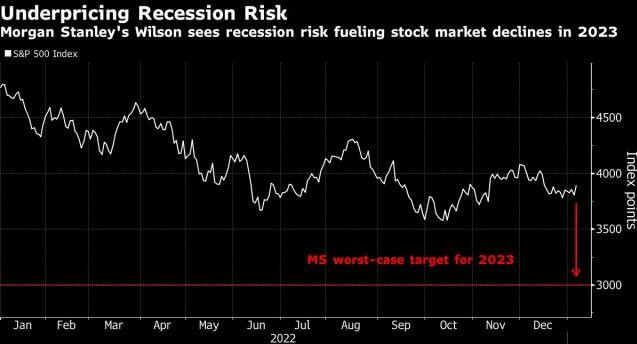
Michael Wilson — long one of the most vocal bears on US stocks — said while investors are generally pessimistic about the outlook for economic growth, corporate profit estimates are still too high and the equity risk premium is at its lowest since the run-up to 2008. That suggests the S&P 500 could fall much lower than the 3,500 to 3,600 points the market is currently estimating in the event of a mild recession, he said.

“The consensus could be right directionally, but wrong in terms of magnitude,” Wilson said, warning that the benchmark could bottom around 3,000 points — about 22% below current levels.

The strategist — ranked No. 1 in last year’s Institutional Investor survey — isn’t alone in his view that earnings expectations are too optimistic. His counterparts at Goldman Sachs Group Inc. expect pressure on profit margins, changes to US corporate tax policies and the likelihood of recession to overshadow the positive impact from China’s economic reopening.

One of the factors driving Wilson’s bearish view is the impact of peaking inflation. US stocks rallied last week amid signs that a modest ebbing in price pressures could give the Federal Reserve room to potentially slow its interest-rate hikes. Wilson, however, warned while a peak in inflation would support bond markets, “it’s also very negative for profitability.” He still expects margins to continue to disappoint through 2023.

Deutsche Bank Group AG strategists led by Binky Chadha also expect US earnings to decline in 2023. Still, they said stocks could rally through the fourth-quarter reporting season, supported by a year-end selloff and low investor positioning.

That view is at odds with findings of the latest MLIV Pulse survey, which showed market participants are bracing for a gloomy season to push the S&P 500 lower over the next few weeks. Earnings start in earnest on Friday with reports from the big banks including JPMorgan Chase & Co. and Citigroup Inc.

Source: bloomberg.com

Why gold prices may be headed for record highs this year

IMF’s Georgieva expects one-third of the world economy to be in recession this year. That could bolster gold.

Gold recently climbed to its highest prices in nearly seven months, feeding expectations that the precious metal is on track to notch record highs this year, after closing out 2022 with a modest loss.

Gold “noticeably” appreciated by about $200 an ounce from November to the end of last year, and continued that trend in the first few days of January 2023, says Edmund Moy, a former director of the U.S. Mint.

Futures prices for gold GC00, 0.16% GCG23, 0.16%, based on the most-active contract, finished last year with a loss of 0.1%, but posted gains of 7.3% in November and 3.8% in December.

The relative strength of the U.S. dollar and higher interest rates had pressured gold. But since November, the dollar has weakened and the Federal Reserve’s interest-rate hikes started to moderate—prompting gold to start making its upward move, says Moy, who is also a senior IRA strategist for gold and silver dealer U.S. Money Reserve.

Whether there is a soft or hard landing for the U.S. economy this year, the global economy is shaping up to have a worse year than last year, he says, and gold “usually rises during a recession, high inflation, or economic uncertainty.”

In a recent interview on CBS Sunday morning news program Face the Nation, International Monetary Fund Chief Kristalina Georgieva said the IMF expects one-third of the world economy to be in recession this year.

Based on his experience as director of the U.S. Mint during the 2008-09 financial crisis, Moy believes signs point to higher gold prices this year, and he wouldn’t be surprised if gold set new records, “topping $2,100 or more.”

Gold futures climbed to a record intraday high of $2,089.20 on Aug. 7, 2020. They settled at $1,859 on Wednesday after climbing to as high as $1,871.30, the highest since mid-June 2022.

Gold can benefit from a recession

Gold typically sees gains in January, according to Adrian Ash, director of research at BullionVault. Gold futures climbed in each of the Januarys from 2014 to 2020, and posted losses for that month in 2021 and 2022, according to Dow Jones Market Data.

Precious metals may benefit as investors use the start of January to review their portfolio and rebalance their holdings of bullion, equities, and bonds, says Ash.

This month may also bring “heavy demand to invest in gold because—looking at the 12 months ahead—wealth managers and private savers alike focus on potential risks to their money, so they’re choosing to buy a little investment insurance for protection.”

Given gold’s gain at the start of the year, many analysts may already need to revise their 2023 forecast, he says.

In a survey conducted before Christmas, BullionVault users forecast a gold price of $2,012.60 for the end of 2023, with nearly 38% of the 1,829 full responses pointing to the need to spread risk and diversify users’ wider portfolios as the top reason for investing in physical bullion.

Looking ahead, however, the U.S. dollar will be a key to gold’s performance this year.

The dollar fell more than 4% in November—its worst monthly performance for over a decade, says George Milling-Stanley, chief gold strategist at State Street Global Advisors. That puts pressure on dollar-denominated gold prices.

Gold has “nothing to fear” from interest-rate hikes, he says. It’s the impact of rate increases on the value of the dollar that is important. If the dollar has peaked, he expects to see gold above $2,000 again this year.

Some market predictions, however, mention prices as high as $3,000 an ounce. Milling-Stanley says that may be “heroically optimistic,” but “nothing in the world of gold is impossible.”

History suggests, he says, that when gold is in a “sustainable long-term uptrend,” which he believes has been in place since the price last touched $250 in 2001, prices tend to move up “stepwise, consolidating at every stage in the upward march.” That’s what he sees as most likely for 2023.

Meanwhile, net gold purchases for official reserves will continue to be a “significant feature” for the gold market as it has been for over a decade, says Milling-Stanley. Net purchases by the central bank complex as a whole have averaged between 10% and 15% of total global demand every year since 2011, with emerging market country central banks the largest purchasers, he says.

“There is every indication that such purchases will continue into the foreseeable future, not just in 2023,” he says.

Source: marketwatch.com

6 things that will get cheaper in 2023

Inflation burned consumers in 2022. Prices rose faster than wages, on average, eroding the typical shopper’s purchasing power. Some things got so expensive buyers simply gave up.

Consumers ought to get some revenge in 2023. Overall inflation has been slowing, from a peak of 9% in June to 7.1% in November. In coming months, there should be disinflation, or a declining rate of inflation, in many categories of goods and services. In some categories there will be deflation, or an outright drop in price levels. In the charts below, these trends show up as a declining rate of year-over-year inflation toward the end of 2022. By the end of 2023, many and perhaps all of those charts will show negative year-over-year inflation, or deflation. Here’s where to watch for important price declines:

Real estate. Forlorn buyers priced out of the housing market during the last two years may perk up in 2023. Home prices have already started to fall on a month-to-month basis, according to the S&P/Case-Shiller index and a variety of other indicators. The Case-Shiller index peaked in June and has since fallen four months in a row, with October prices the latest available. The reasons are well understood. Spiking mortgage rates, driven by the Federal Reserve’s interest-rate hikes, have slashed housing affordability and driven buyers to the sidelines. Crumbling demand has started to bring prices down from the record highs of the COVID pandemic.

Since real-estate repricing has just begun, it could go on for a while. It’s very unlikely home prices will crash as they did after the 2003-2006 housing bubble, when average prices fell by 27% nationally — and by more in the frothiest regions. But prices have only fallen 3% so far, after a 26% spike from the start of the COVID pandemic to the peak in June. If home prices fell back to the pre-COVID trendline, that would be a drop of 10% or a bit more from current levels, which seems plausible.

The Fed is likely to slow and then halt its pace of interest rates hikes in 2023, which should allow home prices to stabilize at some lower level. At that point, it would take declining mortgage rates to boost affordability. Some forecasters think rates will be slightly below current levels by the end of the year.

Rent. Like real-estate prices, rents are likely to drop as rising interest rates cool demand for property. The Zillow observed-rent index has already dropped for two consecutive months, from September through November. This also seems likely to continue. Rents are still about 25% higher than pre-COVID levels, yet they’ve only fallen by about half-a-percentage point from the 2022 peak. A return to pre-COVID trends implies a further decline of 10% or so. Many renters won’t benefit until they sign a new lease, since rents are normally set for the length of the contract. But the worst of the pain may be over for people who haven’t been able to buy during the last few years and then got stuck paying rent that’s risen by double-digits.

Cars. The inflation rate for new vehicles peaked at 13% in April 2022. For used cars, it peaked at an insane 41% last February. A semiconductor shortage drove soaring car prices, with manufacturers unable to finish building millions of new cars and frustrated buyers switching to used. The average price of a new vehicle soared to nearly $49,000 during the pandemic. Savvy buyers know how to haggle at the dealership, yet buyers have paid more than the sticker price every single month since January 2021.

This won’t last. The semi shortage is now easing. There’s still pent-up demand for new cars, which means sales could stay strong during the first half of 2023, with prices moderating but not declining. By the second half of the year, however, there could be a glut of new cars, with prices falling back to more normal levels. Used-car prices will fall faster, and by more. Government inflation data show that used-vehicle prices are already 3% lower than a year ago, with bigger declines expected in coming months. Rising rates are denting used-car sales in particular, and repossessions could rise if there’s a recession in 2023, as many economists expect. By the end of the year, used cars could be a fantastic bargain. Rental-car prices could drop this year as well, for similar reasons.

Appliances. These require semiconductors, too, and at the beginning of 2022, shortages pushed the inflation rate for appliances to nearly 9% on a year-over-year basis. Appliance prices moderated toward the end of 2022 and could start to turn negative in 2023.

Electronics. The price of computers, smartphones, and other gizmos normally declines over time, since ongoing gains in computing power consistently produce more bang for the buck. The chip shortage, combined with the work-from-home boom and a surge in demand for gear, pushed the cost of electronics slightly higher at the beginning of 2022. But that trend has now reversed, and drooping demand in 2023 could mean great deals on many tech products.

Hotel rooms. The cost of a hotel stay soared as the economy reopened in 2021 and 2022, and the lodging industry struggled to keep up with demand and rehire enough people. Those problems are now largely solved, with prices falling back in line. If there’s a 2023 recession, watch for price cuts. Don’t expect the same for airfares, however. Pilot shortages prevent airlines from putting more planes in the sky and jet fuel costs could stay high indefinitely.

Two wild cards. Food and energy costs may continue to strain family budgets and keep overall inflation above the Federal Reserve’s target of 2% or so. Food inflation got worse, not better, during the last six months of 2022, and that could continue. Diesel fuel is unusually scarce, raising the cost of operating farm machinery and transporting food. High fertilizer costs are also pushing food prices up, and that’s due in part to a disruption in fertilizer components from Ukraine, Russia, and Belarus, due to the Russian war in Ukraine.

Consumers have gotten a break recently on some forms of energy, with gasoline prices down 35% from the peak in June and essentially unchanged from a year ago. But natural gas prices have been up for most of the year, pushing heating and electricity costs higher, since utilities that use gas normally lock in prices ahead of time. Global energy markets remain tight, which means a small increase in demand from anywhere could push prices up everywhere. That boost in demand could very well come from China, as it reopens following months of strict COVID lockdowns. Tightening sanctions on Russia could also affect energy supplies, especially if Russian President Vladimir Putin decides to cut exports of oil and gas. But there’s always volatility somewhere, and price hikes in some things in 2023 will be offset by price cuts elsewhere.

Source: finance.yahoo.com

Opinion: It’s time to buy I-bonds again; here are 3 ways to maximize your $10,000 inflation-fighting investment

The current rate is good, but if you hold off until just before the next change, it could be even better.

Another year, another $10,000 you can buy in Series I bonds.

The once-obscure Treasury investment soared in popularity last year because of its enticing inflation-adjusted rate, which peaked at 9.62%. That leapfrogged bank deposit accounts and completely trounced negative stock- and bond returns. The caveat? Individuals are limited to $10,000 per year, and those who hit the maximum had to wait until the new year to get more.

So now that you can buy more, the question is, when should you?

The current annualized offering at TreasuryDirect.gov is 6.89%, which is a composite of a 0.4% fixed rate that stays for the life of the bond, and a half-year rate of 3.24% that is good until the end of April. Note that you’re locked into I-bonds for one year, and you lose three months of interest if you cash out before five years.

At the turn of the new year, that’s above comparable investments that are still under 5%, such as high-yield savings accounts, certificates of deposits, TIPS and Treasury bills and notes — but not by quite the margin as last year. The next rate change happens on May 1, and we’ll know the last batch of data that feeds into how the inflation adjustment is calculated in mid-April.

1. Why to buy I-bonds now

Making your decision about when to buy your next batch of I-bonds depends on how you feel about the overall U.S. economic situation. If you feel optimistic that inflation is waning and will go back soon to more normal 2% levels, you may want to buy the full amount now and capture as high a rate as you can.

That’s also the case if you’re not planning on holding your I-bonds for long, and will cash them out once your one-year holding period ends.

Financial planner Matthew Carbray, of Ridgeline Financial Partners in Avon, Conn., has been advising clients to make the full purchase now because he thinks the interest rate will be lower in May and going forward. “I don’t feel inflation will tick up much, if at all, between now and April,” he says.

He went all-in for himself on the first business day of the year. “I like to have my money earning the most it can from day one,” he says.

If you follow suit with your $10,000, there are some ways to buy more throughout the year, primarily with a gifting strategy. You can buy up to $10,000 for any individual as long as you have their Social Security number and an email address. They can claim the gift in any year they haven’t already reached their own individual limit.

You can also get up to an additional $5,000 in paper I-bonds as a tax refund, and then convert those to your digital account. That’s something you want to act on right now. Thomas Gorczynski, a senior tax consultant at his own firm based in Phoenix, is planning to pay extra on his last quarterly tax payment and then set the refund to come in the form of I-bonds. “You can easily overpay your fourth quarter estimated tax payment by Jan. 15, and then quickly file your taxes for a refund — then you’re not letting the government hold on to your money for too long,” he says. “You’re not going to get wealthy on this strategy, but inflation-protected investments should be in every portfolio.”

2. Buy half now and hold half until mid-April

Gorczynski is going with a half-and-half strategy for his main I-bond allotment in 2023. He’s putting money in at the end of January (to get a full month of interest where the money is parked now) not only for himself as an individual, but also for several S Corp business entities that he owns. Then he’s going to wait until the middle of April to decide what to do with the other half of the money.

The key for him is whether it looks like the I-bond fixed rate will rise in May, for which there’s no public formula. So he’s watching the real-yield rates of TIPS as a proxy. “If real TIPS yields have been high the whole time, I may wait and hope for a higher fixed rate. It’ll be a guessing game, but I think if the 10-year TIPS is high, there’s a chance the fixed rate will go higher,” he says.

From a tax perspective, Gorczynski expects to start seeing a lot of questions about how to handle I-bond proceeds, which are not taxable as federal income until redemption (up to 30 years), and are exempt from both state and local taxes. He added a section on the taxation of inflation-adjusted investments to his education seminars for tax professionals. Among the pro tips he shares: If an I-bond is redeemed in a year where there’s qualified education expenses, it can be excluded from federal income, making it an attractive alternative to struggling 529 college savings plans.

3. Hold it all until mid-April

The I-bond rate you get in January is the same you’ll get in mid-April, so unless you have money sitting around that you need to move, you could just wait and see.

“By waiting, the only thing that happens is the clock doesn’t start ticking on your one-year holding period,” says David Enna, founder of TipsWatch.com, a website that tracks inflation-protected securities.

Enna is waiting for the inflation report for March that comes out on April 12, and then will be making a decision about what will be the best deal. You could do half your spending in April and half in May, or push the whole amount into one of the months, depending on which looks better. Enna says you have to look at more than what’s happening with inflation, though, because that only constitutes half of the formula. It’s the fixed rate component that matters long-term. “I-bond investors like higher fixed rates,” Enna says.

The case for buying in April would be if economic indicators show real yields down, the Fed stops raising rates and inflation moderates or drops. Then you might assume that the rate in May will be lower overall than now.

The case for May would be if real yields are up, which would then look like the fixed component would also rise. Then you’d have an investment that’s guaranteed to make that amount above inflation every year, which is good for capital preservation. Inflation could also shoot up if gas prices rise or because of some unforeseen variable, and then I-bond’s inflation-adjusted rate could go up higher. Says Enna: “I recommend buying them every year, but I’m the inflation-protection guy. That’s my thing.”

Source: marketwatch.com